I’m a reasonably practical guy. I like explanations. I like cause and effect. I’m not anti-science. Quite the opposite. I’m one of those people that usually assumes if something actually works, somebody somewhere has already measured it, published it, regulated it, and turned it into a subscription service. Then my daughter got horses. Rescue horses. And now I’m standing in a barn listening to a livestock rancher explain animal biology to me like he’s revealing state secrets.
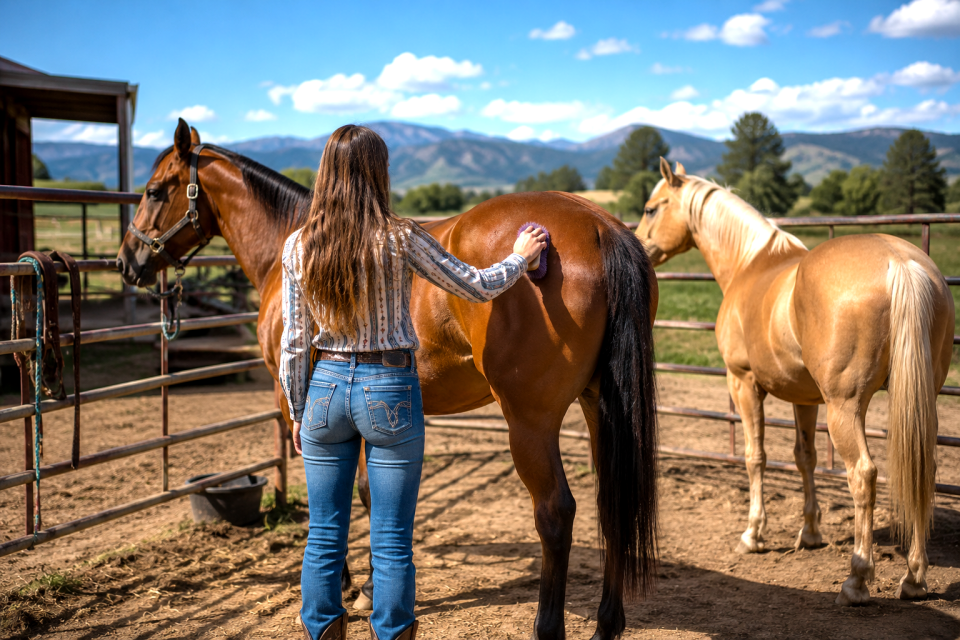
The embarrassing part? Some of it appears older than modern medicine. So here’s my confession. I don’t know what’s true. I only know what happened.
When Mary brought home the horses, they weren’t thriving. One roughly eight hundred pounds. One around nine hundred. Not starving. Not emergency-level. Just… not right. Their eyes looked tired. Their coats looked flat. And there’s a look animals get where they’re surviving but not participating. That’s what bothered me.
My friend Russ came out. Russ comes from livestock people. Multiple generations. They buy animals nobody wants. Sick animals. Thin animals. Animals that don’t pencil out. And somehow they turn enough of them around that they built a business doing it.
I finally asked him, “What’s the secret?” He shrugged, “Most people think they need expensive.” Then he said, “First thing I think about is load.”
I said, “What load?” He said, “Everything riding inside the animal.”
Now before anybody rolls their eyes, stay with me. Russ’ idea is not that animals are crawling with monsters. His idea is simpler. Every environment carries biological pressure. Pastures. Water. Stress. Travel. Other animals. Cats. Chickens. Events. Shared fencing. Shared buckets.
His theory, whether right or wrong, is animals don’t stay isolated. They exchange more than people think. And according to him, animals under parasitic pressure can stop thriving long before they look obviously sick.
Then he started talking. This is where it got weird. He starts talking about how old livestock people approached parasite and worm management. Not one silver bullet.
- Different approaches.
- Dewormer rotation.
- Never overusing one thing.
- Watching outcomes.
- Adjusting.
He specifically mentioned old-school livestock people preferring not to become dependent on one approach because they believed nature adapts. That wasn’t shocking. What surprised me was later learning that resistance management and targeted deworming became actual modern conversations too.
Then the stories got stranger. Iodine wash-down routines. Chlorine dioxide sanitation and water purification practices.
Things I later discovered weren’t invented by Russ at all. People really did do versions of these things decades ago.
Then he started talking about turpentine.
I remember thinking, this conversation has officially left Earth. But Russ didn’t talk like somebody selling a miracle. He talked like somebody repeating old observations. He’d say things like, “My granddad swore by it.” Or, “Consistency and timing is everything.”
There was always a degree of uncertainty. More curiosity. Then came the part that really got me thinking. Water. Russ started talking about how livestock people historically thought differently about water than pet owners do.
Anti-parasitic water cleanliness treatment to reduce environmental burden. People have always tried to reduce what animals are exposed to.
Again, I’m not saying anybody should do anything. I’m saying people did. And apparently they still do.
Then something uncomfortable happened. The horses improved. Slowly. Dramatically and unmistakably.
Weight climbed. Energy climbed. Coats improved. Disposition improved. Now they’re around one thousand and eleven hundred pounds.
Mary’s talking jumps. Training. Competing. Future.
And now I’m stuck with a problem, because I don’t know what deserves credit.
Was it,
- Rotating the dewormers (Zimecterin Gold, Panacur, Pyrantel)
- Chlorine dioxide?
- Alternating iodine and sulfur baths?
- Turpentine?
- DMSO?
- Love?
- Basic horse care?
- Some combination?
No idea. And that’s what bothers me. Because now I’m curious.
I started reading. And discovered Russ isn’t alone. Not even close. There’s this whole underground layer of old agricultural knowledge. Some of it probably wrong or outdated. Some abandoned or rediscovered. Some impossible to evaluate, but clearly not invented.
And now I’m trapped, because I don’t have time to become an agricultural historian. I have horses. I have stalls. I have a daughter with dreams.
So, maybe this article is me throwing this out there. Not to convince anybody. Not to recommend anything. Just to ask. Have you heard this stuff?
Did your grandparents do weird livestock things?
Did old ranchers actually think this way?
Did anybody ever study any of it?
Because from where I’m standing, I can’t explain what I saw, and that makes it interesting.
Meanwhile, Mary just wants me to stop asking questions and go fill hay nets. Which, honestly, might be the smartest advice I’ve gotten.
~ Ian Valdus